Walking the Suck Valley Way in January: What Nobody Warns You About
/ by Cathal Whelan / 3 min read / The Walking Trail
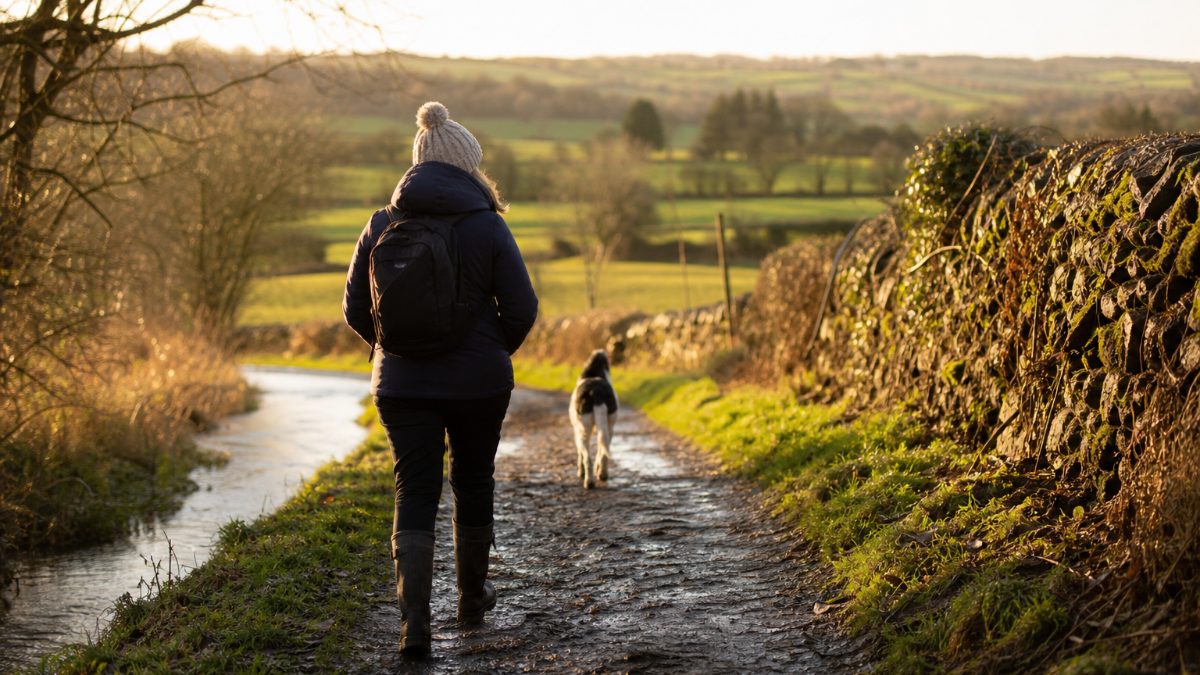
January is not when most people think about walking. It is cold, the days are short, and the countryside looks like it has given up for a while. But there is something about the Suck Valley in deep winter that is genuinely different from any other time of year, and not in a bad way. I went out on a long section last January, somewhere between Ballinasloe and Castlecoote, and I came back with a few thoughts I wish someone had shared with me beforehand.
The first thing that caught me out was the ground. Not the cold, not the rain, but the actual surface underfoot. The Suck Valley Way follows a mix of old laneways, field paths and river margins, and in January those transitions between surface types become much more dramatic. A lane that is firm in summer can be holding an inch of standing water from the week before. A grass path along the river can look fine from ten metres away and turn to soft mud the moment you step onto it. The river meadows in particular hold water long after rain stops. The soil is heavy and slow to drain, and in January it rarely gets a dry spell long enough to firm up properly.
I was wearing what I thought were adequate boots. They were waterproof hiking boots, reasonably sturdy. By lunchtime my socks were damp, not soaked, but damp, and that was enough to make the second half of the walk significantly less enjoyable than the first. The lesson there is simple: in January, waterproofing on your footwear needs to be fresh and reliable, not just technically present. If your boots are more than a couple of seasons old and you have not retreated them, treat them before you go.
The daylight problem is real
People say it but it still surprises you. In mid-January in this part of Ireland you have something like eight hours between sunrise and sunset, and that sounds like plenty until you factor in that it is not fully bright at either end. You are losing usable light from both sides of the day.
I set off at half nine thinking I had loads of time. By half three the light was already going flat and grey, and by four I was walking in that murky half-dark that is worse in some ways than actual darkness because you can still see, just not well enough to be comfortable on uneven ground. I had a head torch in my bag, which I would strongly recommend having, but I had not thought about how it changes your experience. You slow down. You second-guess your footing. What would have been a relaxed final few kilometres became a bit tense.
The practical upshot is this: plan your January route around a midday start if you are doing a shorter section, or set off early and be honest with yourself about where you will be when the light fades. The route is waymarked, but waymarks are easier to spot in daylight.
What to pack differently
Beyond the boots and the head torch, a few other things matter more in January than they do from April onwards.
- A dry change of socks in a zip-lock bag. This one thing can rescue a walk that has gone wrong underfoot.
- More food than you think you need. Cold burns calories faster and there are no cafes open along the rural sections in January, or if they are, do not count on it.
- Gaiters, or at least an acceptance that your lower legs are going to get muddy. Lightweight gaiters are not expensive and they make a real difference on the field paths.
- A thin windproof layer rather than relying entirely on insulation. The valley can funnel some sharp wind off the river.
What you get in return
The river is higher, faster and a different colour entirely. The floodplains are doing what floodplains are supposed to do, and there is something worth seeing in that. You will almost certainly not meet another walker. The hedgerows are stripped back and you can see field boundaries and old earthworks that summer vegetation hides completely. It is quieter in a way that takes a bit of getting used to, but once you settle into it, it is exactly the kind of walk that January calls for.
Just treat your boots before you go.