Why I Moved from Dublin to a Village Near the Suck and What Surprised Me Most
/ by Cathal Whelan / 4 min read / Country Living
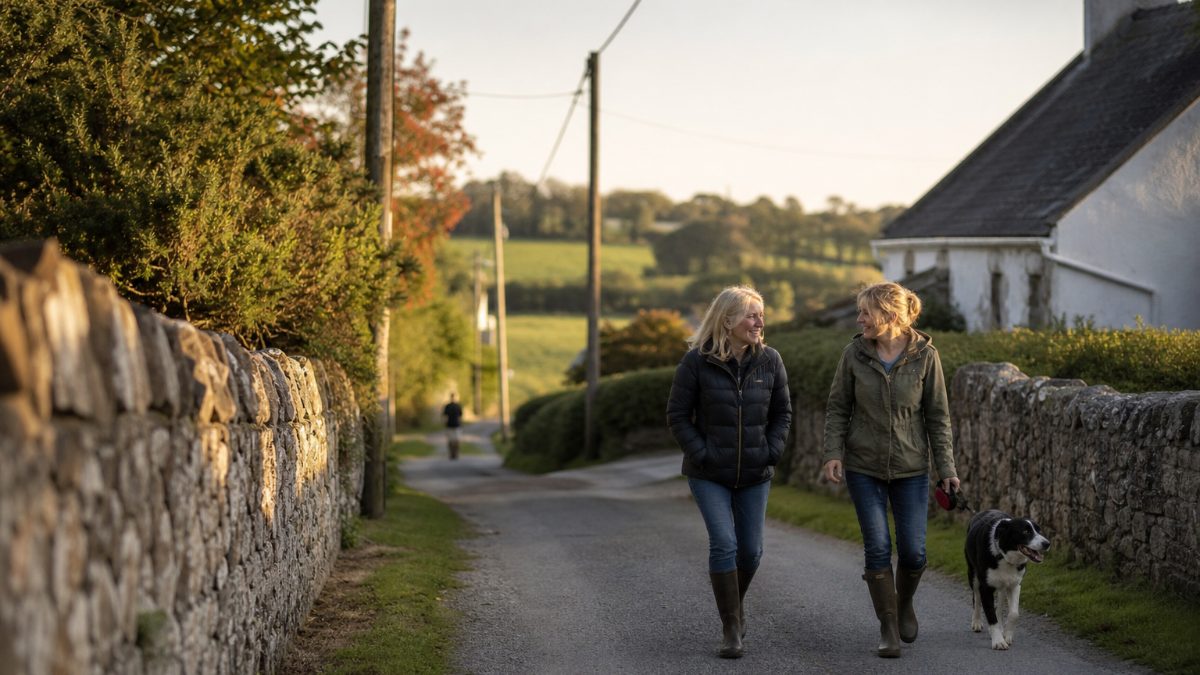
Three years ago I was renting a two-bedroom flat in Ranelagh, paying rent that made my eyes water every first of the month, and spending roughly two hours a day on buses and the Luas going nowhere very fast. The plan to move west had been forming for a while, but it was one of those plans you keep deferring until you realise you've been deferring it for four years.
I ended up in a small village in south Roscommon, about eight kilometres from the River Suck. I'm not going to name it because it's small enough that half the people in it would know exactly who I am, and the other half already do. What I will say is that it has a pub, a church, a community hall that gets used more than you'd expect, and not much else. That's not a complaint. That's exactly what I wanted.
What I didn't want was to be naive about it. I'd read plenty of content online about moving to rural Ireland. The photography is always stunning. The lifestyle pieces talk about slowing down, reconnecting with nature, the community spirit. Some of that is true. But a lot of it glosses over the parts that actually matter when you're trying to live there rather than visit.
The house itself was the first lesson
I bought an old stone cottage. Not a ruin, not a renovation project in the dramatic television sense, but a house that had been lived in by someone elderly for a long time and hadn't seen a significant upgrade since roughly 1987. The survey flagged some things. It didn't flag everything.
Within the first few months I was dealing with an electrical system that a local sparks described, with admirable restraint, as "not what you'd want." If you're in a similar position, the costs involved in sorting out a house like that are worth understanding before you commit. I found that posts like what it actually costs to rewire an old farmhouse in Roscommon gave me a more realistic picture than anything the estate agent said.
The septic tank was another thing entirely. It was there, it worked, and I assumed that was the end of it. It wasn't. There are inspection requirements and registration obligations that nobody mentions until someone mentions them. The experience of a neighbour of mine, who went through the process in county Galway, is fairly representative of what you face anywhere in this part of the country. Worth reading up on before you buy, not after.
The social part is real, but it works differently
People do talk to you here. That part of the rural-life content is accurate. But the way it works is different from what gets described. It's not that people are warm and welcoming in an open-arms sense. It's quieter than that. Someone will ask how you're getting on. You'll say fine. They'll nod. That's it, and somehow that counts. You build up a kind of credit slowly, by showing up at things, by not being a nuisance, by not making a big deal of yourself.
What surprised me more was how functional the community actually is in practical terms. When my boiler packed up in January, I had three separate people offer me their shower before I'd even posted anything online. When a tree came down in the garden after a bad night of wind, a man I'd spoken to maybe twice arrived with a chainsaw the following morning. He wouldn't take anything for it.
That doesn't mean everything is easy or that everyone is your friend immediately. There are people who've lived here thirty years and are still considered blow-ins by certain quarters. I've accepted that I'm probably in that category for the foreseeable future. It doesn't bother me. The practical goodwill is real even if the deeper belonging takes time.
The things that actually take adjustment
The drive. I knew about this in theory. Living it is different. I do about forty kilometres most days between the nearest big town, the school run if I'm covering for a neighbour, and anything resembling a hardware shop or a GP. Ballinasloe is my nearest town of any size, and I've come to appreciate it more than I expected to, actually. It has more going on than its reputation suggests.
The quiet took longer to adjust to than I thought. Not in a bad way, but in a way that takes your body a while to register. The first few nights I kept waking up because there was no ambient noise. No buses, no voices from the street, no distant sirens. It felt wrong before it felt right.
The weather here is different too. Midland weather. It's not the dramatic Atlantic weather of the west coast, it's more persistent and grey in a way that doesn't photograph well. The Suck valley in particular holds the damp. I've walked sections of the Suck Valley Way in January, and what that feels like underfoot and overhead is not what the trail's summer photos prepare you for at all.
Heating was something I underestimated. The cottage is cold in a way that Dublin apartments simply aren't. I spent a long time wondering whether to put in a solid fuel stove. I eventually did, and I'd do it again, but it was a bigger decision than I'd treated it as initially.
If I'm honest, the thing that surprised me most wasn't any single practical difficulty. It was how much the rhythm of the place got into me without my noticing. By the second winter I'd stopped checking the time as often. I'm not sure exactly when that happened.