What Does It Actually Cost to Rewire an Old Farmhouse in Roscommon?
/ by Meabh Doyle / 4 min read / Trades and Renovation
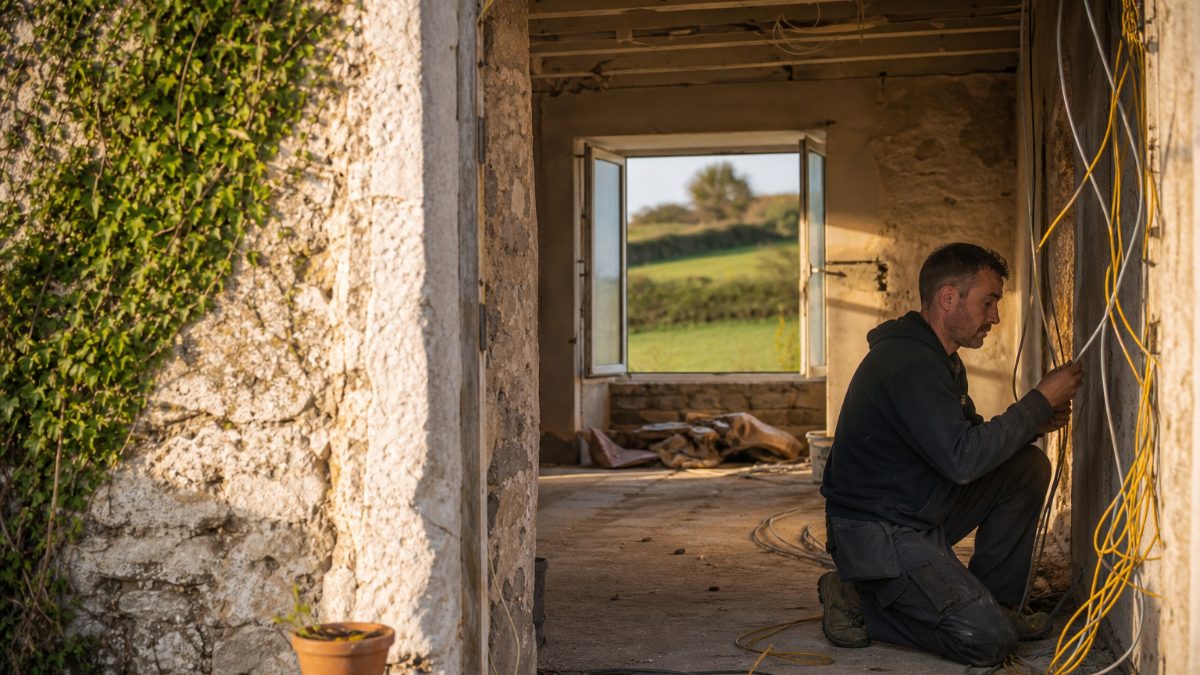
A neighbour of mine spent most of last winter getting quotes to rewire her 1940s farmhouse outside Strokestown. The house had been in the family since it was built, the wiring had been patched and added to over the decades, and the ESB inspector had made it fairly clear that the situation needed sorting before she could get the place properly insured. What followed was an education in how differently electricians can approach the same job, and how the final bill can end up well above what anyone expected.
She asked three electricians to quote. The first came in around 12,000 euro. The second quoted just over 18,000. The third landed somewhere in the middle at about 15,500. All three were looking at the same house. That range, six thousand euro between the lowest and highest, was the first surprise.
Why quotes vary so much
Some of it comes down to what each electrician actually priced. The lowest quote assumed the existing fuse board location would stay where it was, that some of the older cabling in certain runs could be left in place, and that access to walls would be straightforward. The highest quote had priced everything new, start to finish, including relocating the board, full cable replacement throughout, and a generous allowance for the kind of complications that tend to appear in old farmhouses once you start opening walls.
She went with the middle quote, which she now says was probably the right call, though not for the reasons she originally thought. The electrician was local, had done a couple of similar jobs on older Roscommon farmhouses, and was upfront about the fact that the final price might shift once work started. That honesty, she reckons, was worth more than a lower headline number.
The complications that added cost
Three things pushed the price up once the job was underway.
First, the walls. The house had rubble stone walls under the plaster in certain parts, nearly a metre thick in places. Running cable through or around them took longer than expected, and in two rooms the solution was surface trunking rather than chasing into the wall, which changed how those rooms looked. It was fine in the end but it was not what she had pictured.
Second, the outbuildings. The original quote had covered the house itself. The old haybarn, a small stone shed, and the yard lighting had been treated as a separate conversation to have later. Later arrived faster than expected, and sorting those properly added roughly 3,500 euro on top. If you have outbuildings, get them included in the initial scope even if you are not sure you need them done immediately. It is cheaper when the electrician is already on site and mobilised.
Third, the certification. The house needed an Electrical Completion Certificate to satisfy the insurer, which is standard enough, but there were two remedial items the inspector flagged that required additional work before the cert could issue. Neither was the electrician's fault. They were legacy issues that only became visible once everything else was in order. Add another few hundred euro and a half-day's delay.
The final bill came to just under 20,000 euro, against a quoted price of 15,500. That is a significant overrun by any measure. Some of it was genuinely unforeseeable. Some of it could have been scoped better at the start.
What she would do differently
She was generous enough to talk through this with me, and her main regrets were practical ones. She would have asked each electrician to itemise the quote properly rather than accepting a single figure. She would have pushed harder on what was and was not included. She would have set aside a contingency of at least 20 percent from the start, because old farmhouses almost always find a way to need it.
She also wishes she had thought about the full picture of the house before the work started. The rewiring happened to coincide with conversations about putting in a solid fuel stove in the kitchen, and there was a point where the electrician and the stove installer were essentially queuing for the same wall space. If you are thinking about other heating changes at the same time, it is worth at least reading up on what installing a solid fuel stove in an Irish country home actually involves, so the trades are not working around each other unnecessarily.
The same joined-up thinking applies to anything underground or structural. She had a septic tank query that came up around the same time and ended up being handled separately, which added cost and confusion. Reading something like the account of getting a septic tank inspected in rural Galway beforehand might have helped her frame the right questions earlier.
The house is fully rewired now, properly certified, and she has peace of mind that was not there before. The process was messier and more expensive than she hoped. But the wiring that was in that house when work started was not something anyone should have been living with.