Should You Buy a Derelict Cottage in Rural Roscommon or Build New?
/ by Cathal Whelan / 4 min read / Rural Home and Property
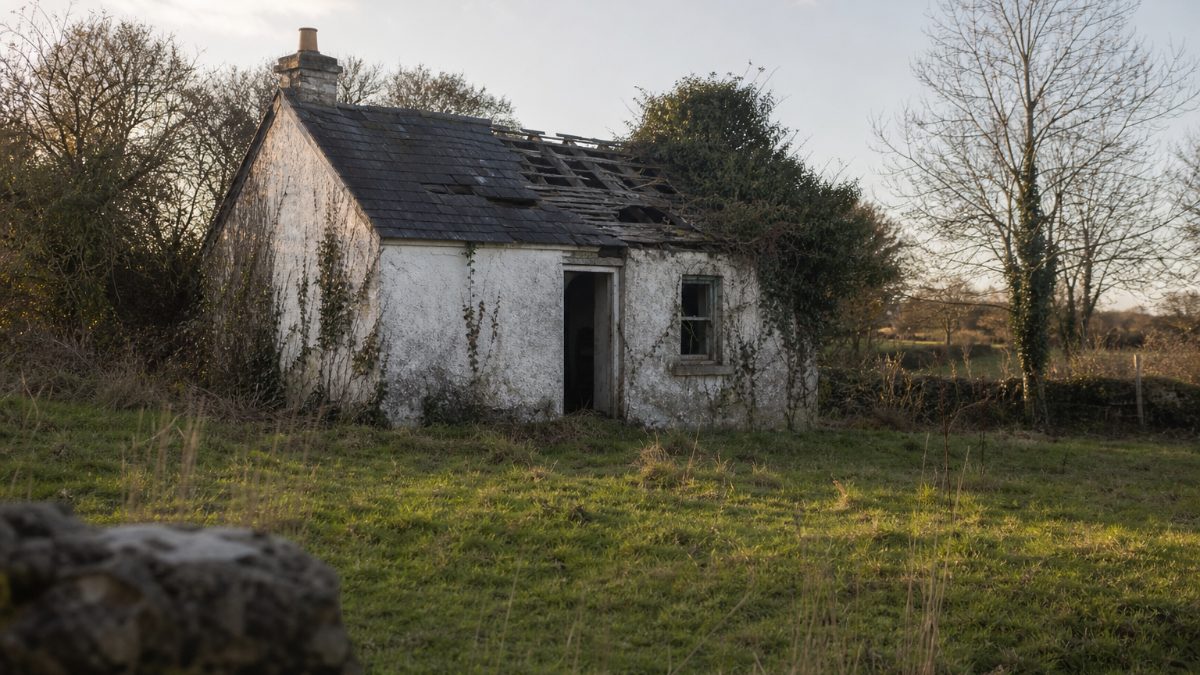
It's a question that comes up a lot among people thinking about relocating to rural Roscommon, or buying a place out here as a base. You're scrolling through property listings late at night, and you see two very different options sitting side by side. One is a derelict stone cottage, roof half gone, nettles up to the windowsills, priced at something that seems almost too good. The other is a site with full planning permission already granted, ready for a new build. Both are within a few miles of the Suck. Both have their own logic. Which one makes more sense?
The honest answer is that it depends on your circumstances more than anything else, but there are some specific realities about rural Roscommon that are worth understanding before you lean too hard in either direction.
The derelict cottage route
The appeal is obvious. A stone cottage with original features, a good site, an acre or two of ground, and a price that reflects the state it's in rather than its potential. There's something real about it too, not just romantically but practically. A footprint already exists. The site is established. Planning for change of use or renovation is generally more straightforward than getting permission for a new build on a greenfield site, because you're not introducing a new dwelling into the countryside, you're restoring one that's already there.
Roscommon County Council, like most rural councils, looks more favourably on the restoration of derelict housing than on new one-off builds in areas without a local need connection. If you're coming from outside the county with no family ties to the land, that matters. Restoration sidesteps a lot of the local need criteria that can block a new build application.
The catches are real though. What looks like a bargain at purchase can become something else entirely once you're inside the walls with a builder and an engineer. Roof structures, damp, foundations, structural movement, and services that may never have existed or were put in decades ago and are now well past their useful life. Rewiring an old farmhouse in Roscommon alone can cost more than people expect before they've even looked at insulation or windows. And speaking of insulation, applying for SEAI support on a stone cottage has its own complications worth reading up on before you assume the grants will cover the gap.
There's also the septic tank question. If the cottage has an existing tank, it may need inspection and possibly full replacement to meet current standards. The experience of getting a septic tank inspected in rural Galway maps closely onto what people find in Roscommon too, the costs, the process and the surprises are broadly similar across the region.
Budget realistically. A derelict cottage that needs full restoration is often not cheaper than a new build once everything is counted. It can be, if the bones are good and you get reliable quotes early. But going in hoping for the best is how people end up six months behind schedule and significantly over budget.
Building new
A new build gives you control. You design to current building regulations from the start, which means better insulation, better air tightness, lower running costs, and no guessing what's behind the plaster. You can position windows for light, plan the layout around how you actually live, and avoid the compromises that come with adapting an old structure.
The planning reality in rural Roscommon is the significant hurdle. One-off rural housing policy in Ireland has tightened considerably over the past twenty years, and most local development plans require applicants to demonstrate a genuine local need connection. This typically means you grew up in the area, have family land, or work in a rural-based occupation that requires you to live locally. If you're coming from Dublin or abroad with no existing ties, getting planning permission for a new house on a rural site is genuinely difficult. Not impossible, but you need to understand what you're getting into before you pay for a site.
Some sites already have planning permission granted, and buying one of those removes the planning risk entirely. That permission does lapse, so check the dates carefully and confirm with your solicitor whether it's still live and what conditions are attached. Some conditions on older permissions are costly to satisfy.
The build itself, if you get there, is straightforward in the sense that you're working from scratch with a known brief. Ground conditions vary across Roscommon, some areas have poor drainage or high water tables, so get a site investigation done before you commit. Services connections, water, electricity and broadband, can all add to the cost depending on how remote the site is.
So which one?
If you have no local need connection and you're coming from outside the county, a derelict cottage with an existing footprint is often the more realistic planning route. It's not automatically cheaper, but it's usually the clearer path through the system. If you do have a local connection or you've found a site with live planning, a new build gives you more certainty over what you end up with.
Either way, get a good solicitor who knows rural property in the west of Ireland, and get a structural engineer on site before you sign anything.