Applying for a SEAI Grant to Insulate a Stone Cottage: A Beginner's Explainer
/ by Meabh Doyle / 4 min read / Rural Home and Property
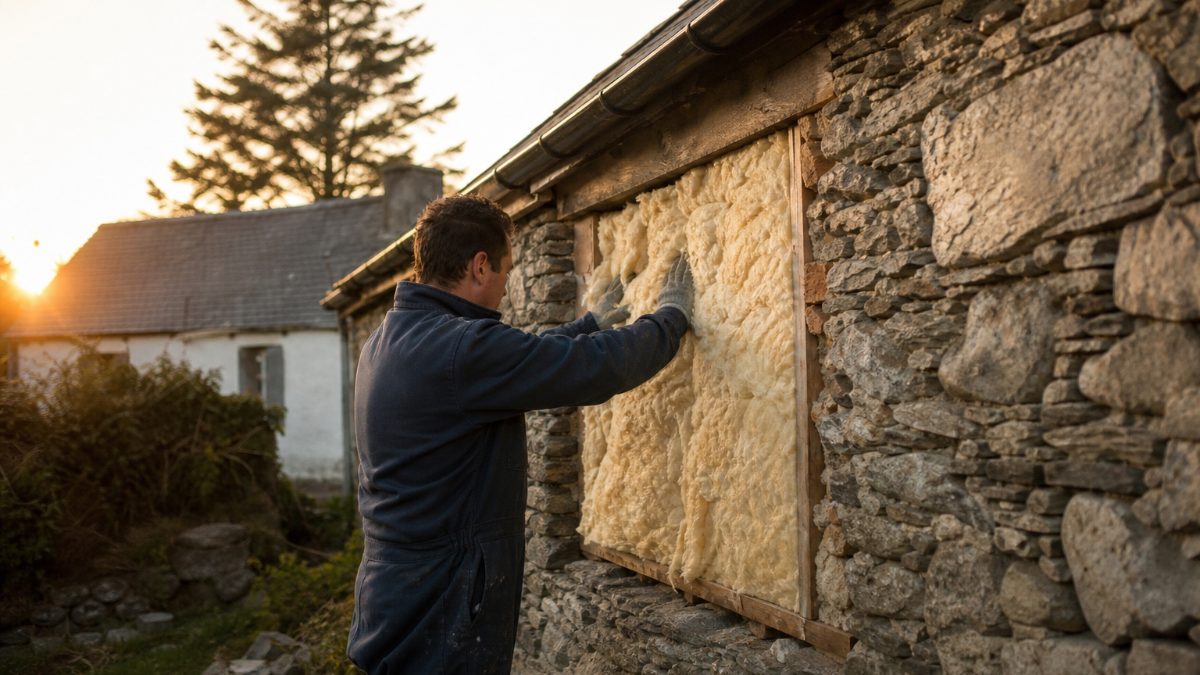
If you own an old stone cottage anywhere along the rural midlands, the SEAI grant system can look like it was designed for someone else. The literature talks about cavity walls, attic insulation and heat pumps, and you're sitting there looking at half-metre-thick rubble stone walls and a roof held up by timber that's older than the state. It doesn't mean the grants aren't available to you. It means you need to know which parts of the system actually apply before you waste time or money going down the wrong road.
This is a plain explanation of where to start, written for anyone who's never applied before and owns a pre-1940s stone-built rural property.
Which scheme are you actually looking for?
SEAI runs several programmes. The one most relevant to older rural homes is the Better Energy Homes scheme, which pays grants for specific individual upgrades, and the One Stop Shop service, which handles deeper whole-house retrofits with an adviser coordinating the work. For a first-time applicant with a stone cottage and a limited budget, Better Energy Homes is usually the more accessible starting point. You apply for specific measures, you pick an SEAI-registered contractor, the work gets done, and you claim the grant after. The One Stop Shop makes more sense if you're planning to do several things at once and want someone to manage the process.
Either way, the portal and the full list of registered contractors both live on the SEAI website, and that's where your application will be submitted regardless of which route you take.
The pre-1940s question and why it matters
Stone cottages built before 1940 are classified differently from modern construction, and that classification affects what materials are acceptable. The core issue is moisture. Old stone walls were built to breathe. They absorb a bit of damp and release it. If you seal them with the wrong insulation, you trap moisture inside the wall and start a slow process of decay: rot in the timber, spalling in the stone, damp patches that never dry out.
For this reason, internal wall insulation in a pre-1940s stone building needs to use materials with appropriate vapour permeability. Things like woodfibre board or specific breathable insulation systems are generally considered suitable. Standard rigid polyisocyanurate (PIR) boards, which are what most builders reach for instinctively, can be problematic in this context. The grant scheme does have approved materials lists, and your contractor needs to be working from those lists. If they're not familiar with breathable insulation in solid-wall buildings, that's worth probing before you sign anything.
External wall insulation is another option, and in some cases it's more straightforward for a stone cottage than internal work. It doesn't eat into your floor space, and it keeps the thermal mass of the wall on the warm side. The aesthetics of it can be a sticking point for people, especially on a building with attractive stonework, but on a roughcast or plastered cottage the visual impact is often minimal.
Roof and floor insulation
If your cottage has a cold attic with a pitched roof, attic insulation is one of the more straightforward grants to apply for and one of the better value ones. Cold attic spaces in rural midlands homes lose heat at a remarkable rate, and this is a relatively contained piece of work. Ground floor insulation is trickier, particularly if you have a solid concrete floor, but suspended timber floors can be insulated from below with rigid boards between the joists.
Where first-time applicants go wrong
The most common mistake is hiring a contractor before checking they're on the SEAI registered list. The grant requires an SEAI-registered contractor. If you get the work done by someone who isn't registered, you get no grant. Full stop. Check the list first, then hire.
The second mistake is assuming you can apply after the work is complete. You need a registered contractor and in many cases a pre-works survey before work starts. Starting before this process is in order means you may not be eligible.
Third, and this applies particularly to older homes: check whether your property has an existing BER (Building Energy Rating) certificate. You'll need an up-to-date assessment as part of the process. If your home has never been rated, that's a step you'll need to factor in.
If you've recently moved to the area and are still getting your head around what old rural homes actually need, it's worth reading up on what surprises people most when they make the move from a city. And if you're wondering about other renovation decisions at the same time, the question of whether a solid fuel stove is still worth installing in 2025 is one that comes up almost as often as insulation for stone cottage owners in this part of the country.
Keep copies of everything: your application reference, your contractor's registered number, your pre-works survey report. The process isn't impossibly complicated, but it does reward people who read the steps in order and don't skip ahead.